Day 2 - Rock of Cashel, Hore Abbey, Cork
The history of Ireland is rife with political and religious strife. But it is, perhaps, hard to full grasp the ramifications of this when you grew up in the United States, a country which is basically experiencing the first throws of preteen angst in comparison to the wizened tenure of Ireland.
This trip is not the first time I've come to see the veritable youth of my homeland. And, being a long-time enjoyer of many Eurocentric historical dramas and fantasy fictions, I am also no stranger to how enmeshed the church and the crown (all the crowns) were. Watching Stannis Baratheon use the "Lord of Light's" power to pursue his rightful claim to the throne of Westeros (pardon the mandatory Game of Thrones reference) was no less entertaining for me than seeing Elizabeth the First pick up the pieces of her country after her sister's notoriously deadly fervor for Catholicism. Both were stories I inhaled with gusto. Both heroes I shook my head at. Their choices brought so much chaos. They hoped the ends justified the means.
But history is written by the victors, as they. It is one thing to listen to stories glorify and romanticize people who were born into this sort of power, and quite another to encounter the actual towns left in the wake of their holy wars.
We awoke with the sun well in its journey across the sky, leaving us scrambling to get our bags packed and room emptied before we missed both our check out time and breakfast.
Once both were accomplished, we took a moment in the lobby to finalize plans for the day. A drive to Cork, our stop for the night. And on the way, a stop by the Rock of Cashel which Rick Steves called "One of Ireland's most historic and evocative sites." Which was the basis for this quick sojourn to break up our drive.
Hore Abbey
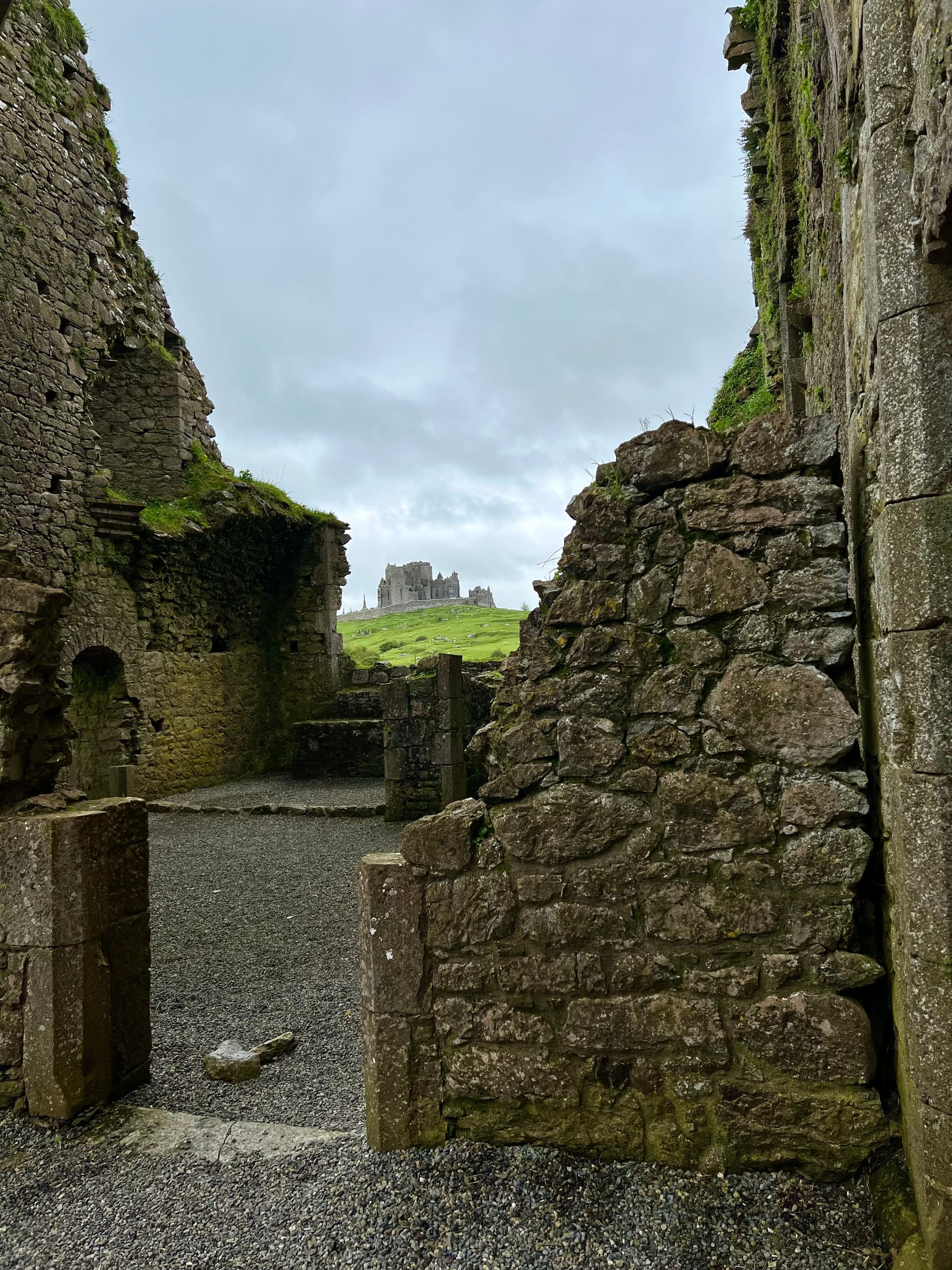
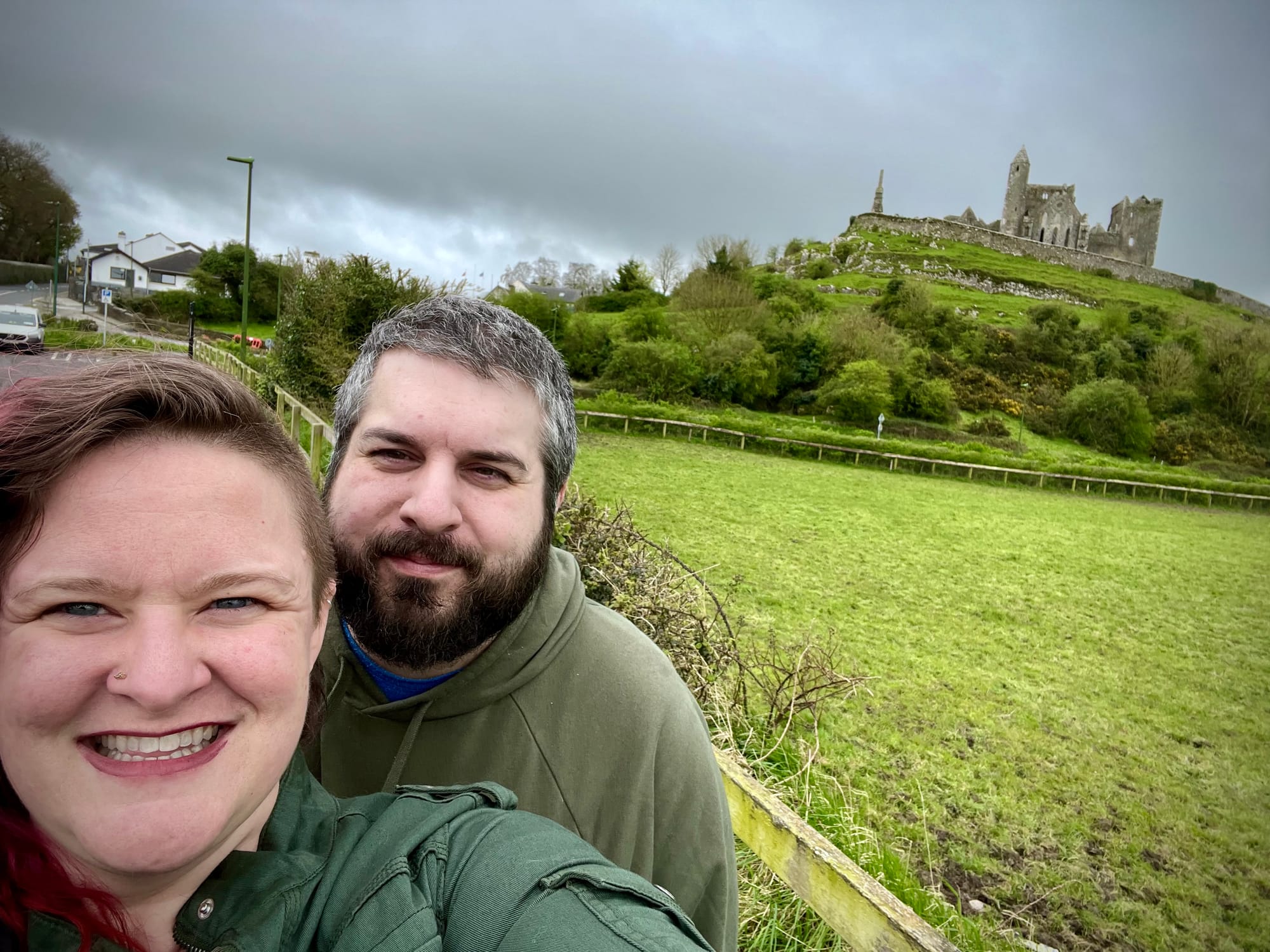
We had planned to go directly to Cashel and get back on the road, but we ended up parking down and around the hill from the medieval monument. With our coats tucked tight against the blustery weather, we ambled down the sidewalk and found ourselves staring at a beautiful little ruin just a field away from our original destination.
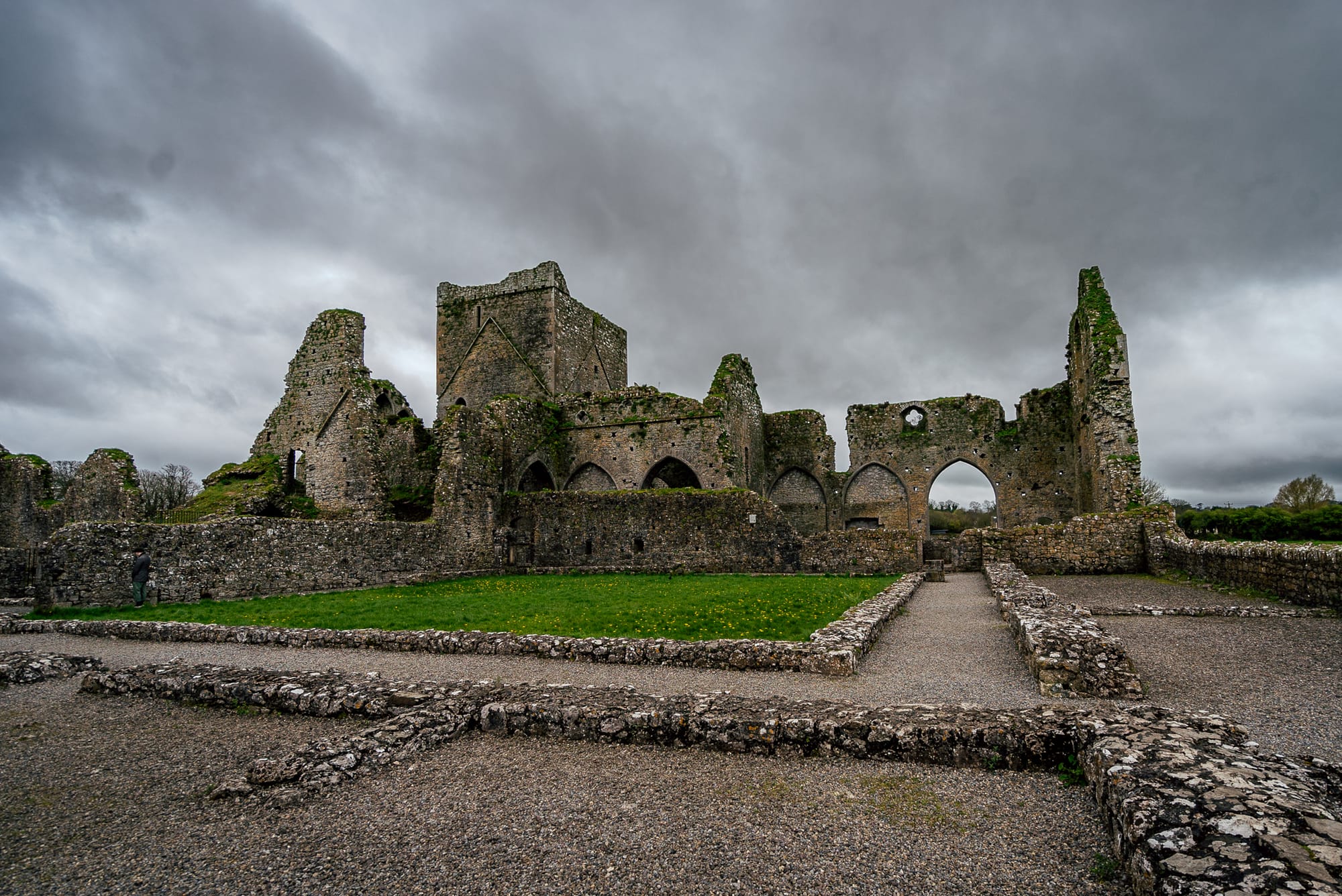
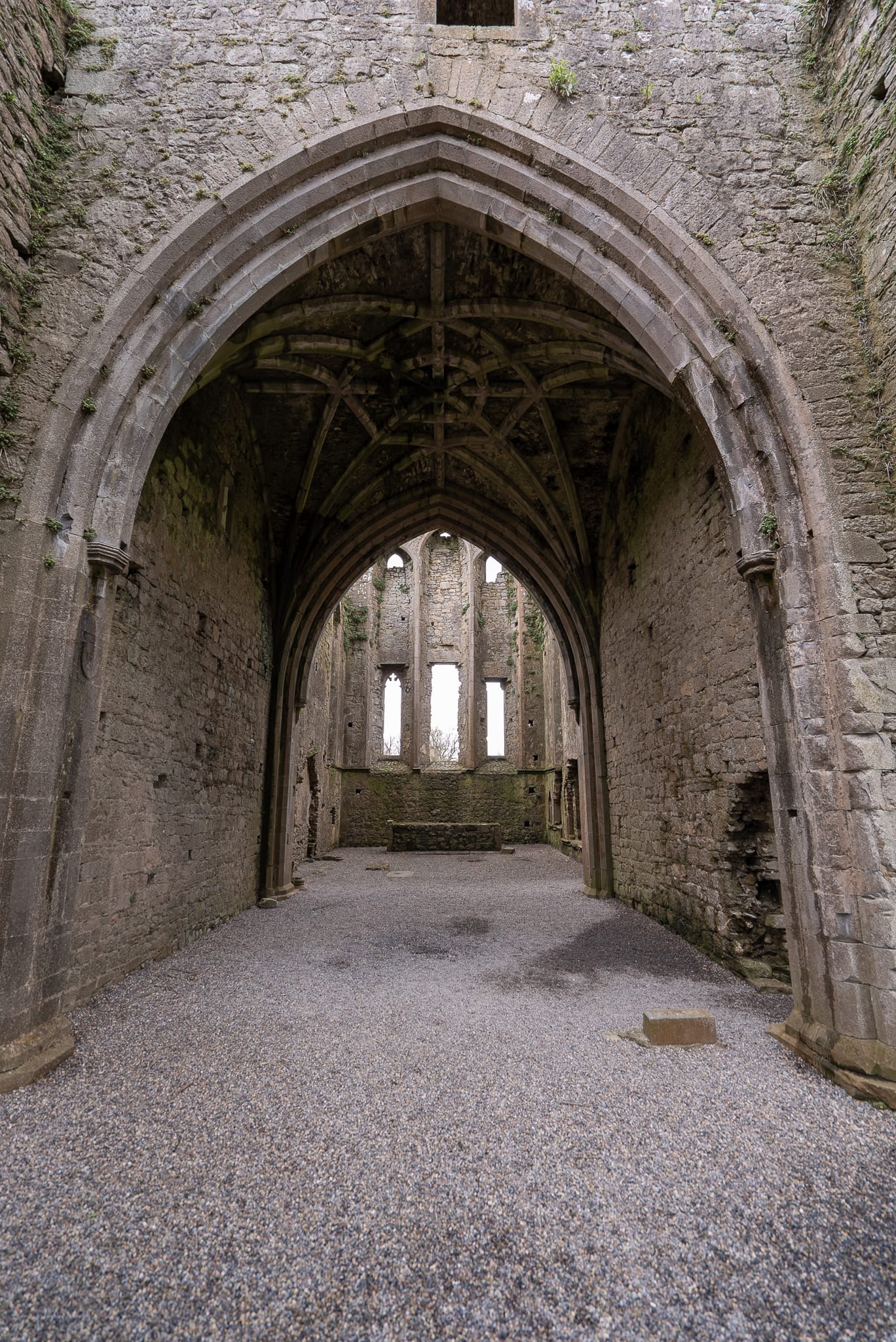
We'd heard about Hore Abbey in Kilkenny. An offshoot mention of yet another Catholic location that passed from one group to another before it had been disbanded and gifted to the Duke of Ormand (owner of Kilkenny castle). And we'd heard about how the religious houses were important to the towns back in the day. Churches were cultural meccas. Where a church was, people came. Where people came, businesses could grow and thrive. Governing bodies used their favored churches to allocate and reallocate resources as they saw fit. Sometimes they were the intermediary between themselves and local lords. Sometimes the church became law makers and keepers. Often the tax collectors.
A town with two churches became a city with more rights and privileges. They often housed people with more education and knowledge, not just on the religious side but on practical daily necessities. Thus, they owned and controlled the access to those necessities also. The monks in Kilkenny purified water. They made sure people could drink the water they purified and buy the beer they made with it.
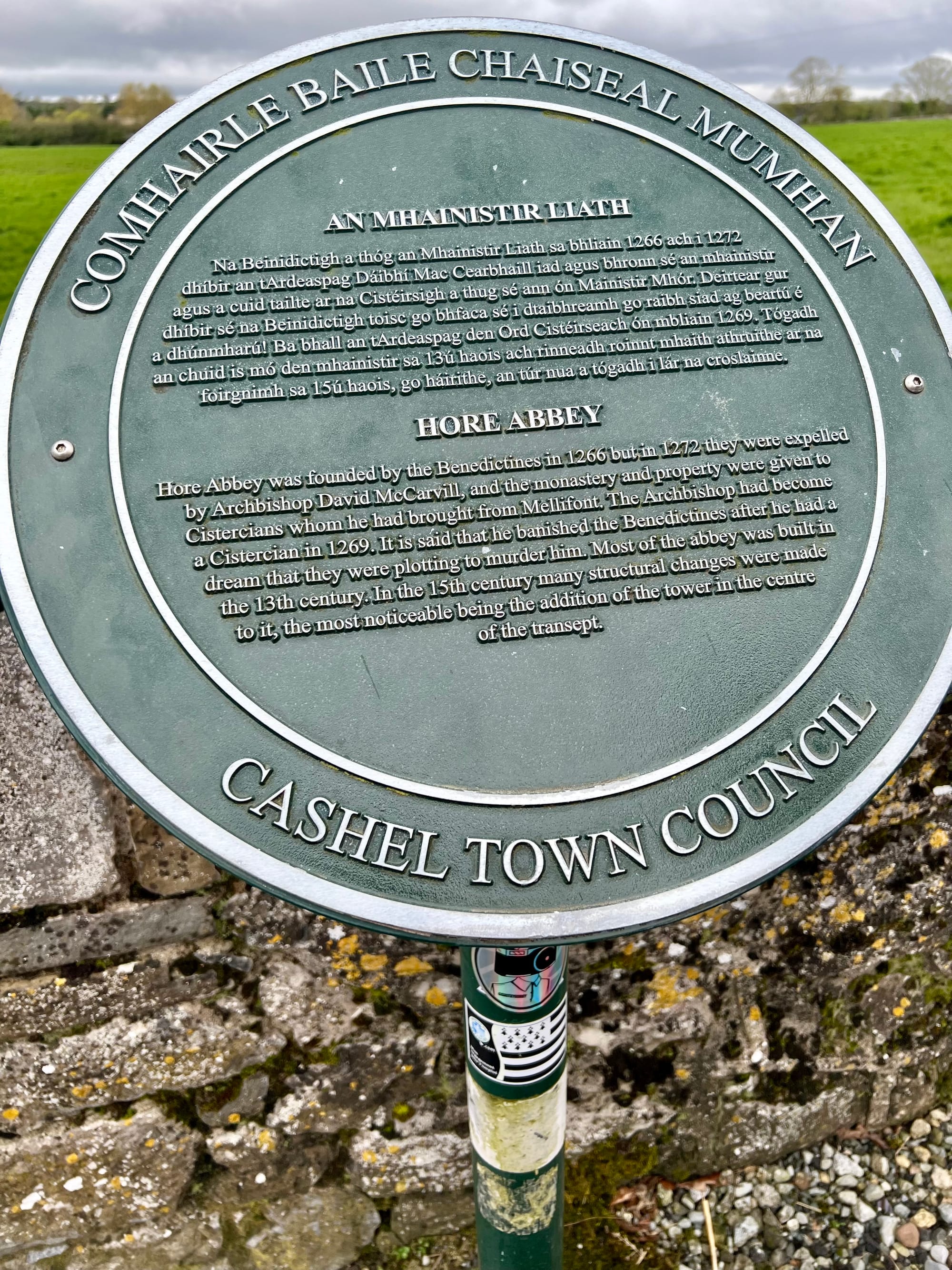
It's thought that when Hore Abbey was taken from the Benedictines and given to the Cistercians to run (both Catholic orders, one in favor and one out of it), the archbishop kindly decided to reallocate the local mill and other town properties as new benefices of the Abbey. This gave the Cistercian's control of them as well. In its heyday, Hore Abbey controlled more than 400 Acres of land.
It's hard to know exactly how this all went down. The plaque near the entrance gives little details, and there is no guide to show you around. The internet provides some resources, but, ultimately, it's clear that the Archbishop had no qualms mandating what he wanted to and what he thought his king would appreciate.
Rock of Cashel
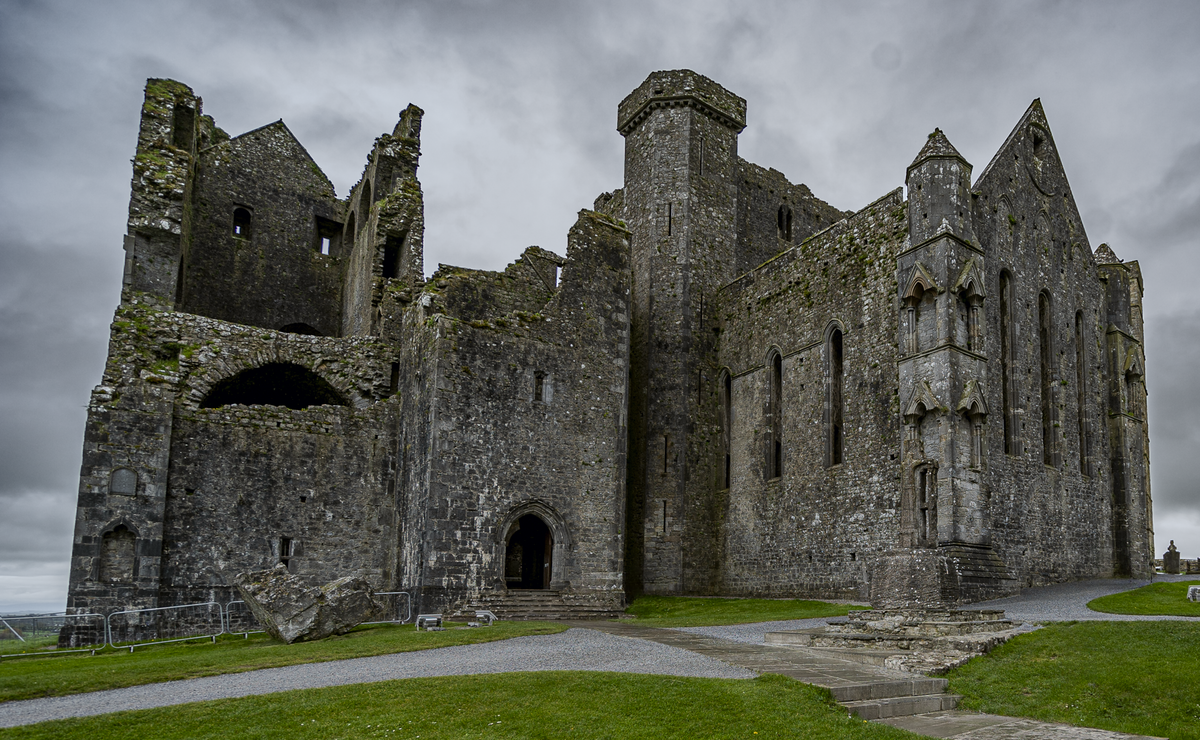
The Rock of Cashel, originally home to the castle of the Irish King of Munster (self-proclaimed high king of Ireland), was given to the church with the surrounding lands by said high king in the early 1100s. Which is how this lovely fort (and the town it oversaw) became the home of the very same Archbishop who would later determine who ruled over Hore Abbey and what assets it owned.
I can attest, after climbing up the now paved rock it sits atop, that it was a formidable location. Not easy to get into. Not easy to overthrow. The Rock of Cashel was a stronghold and became the church's stronghold thereafter.
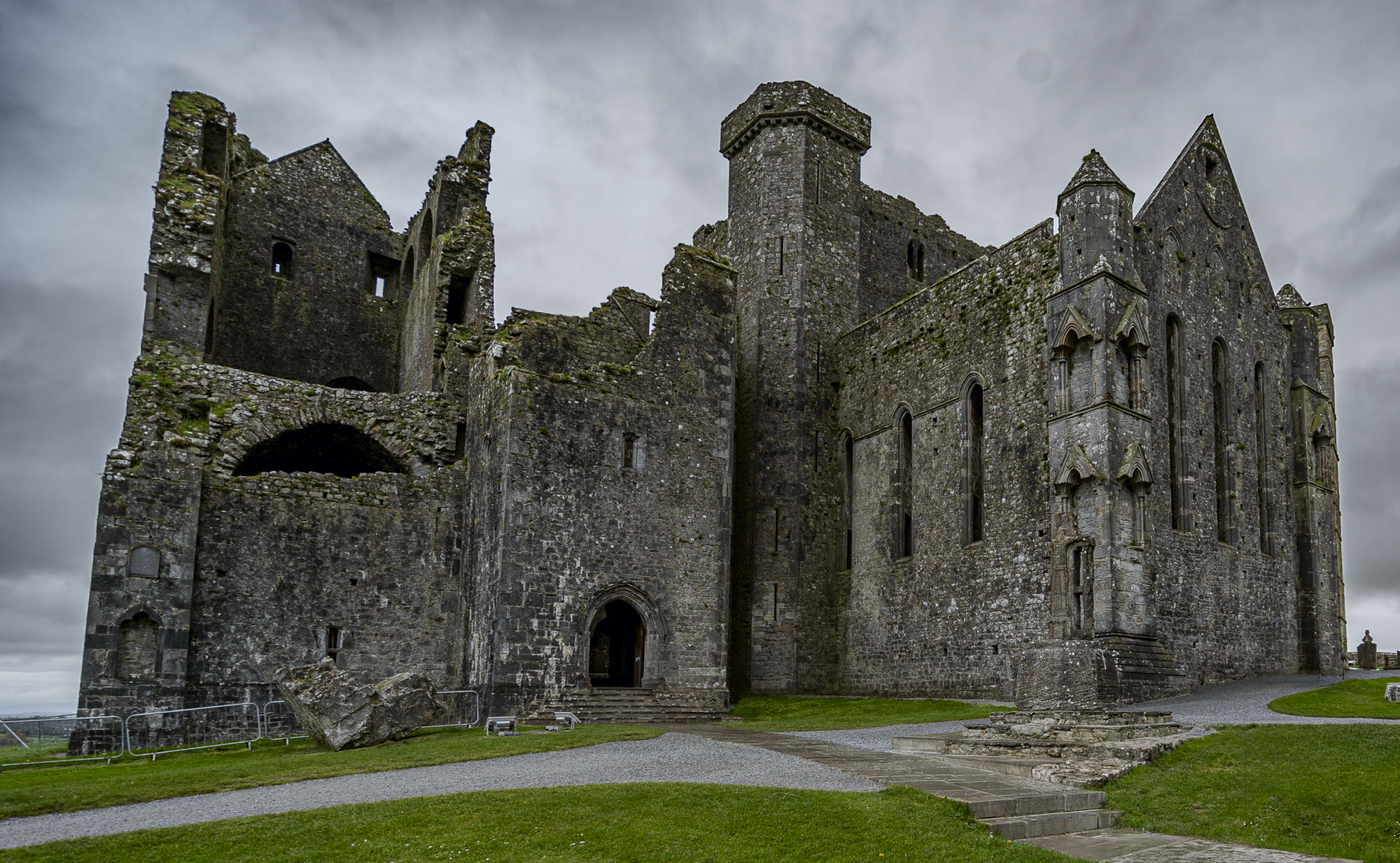
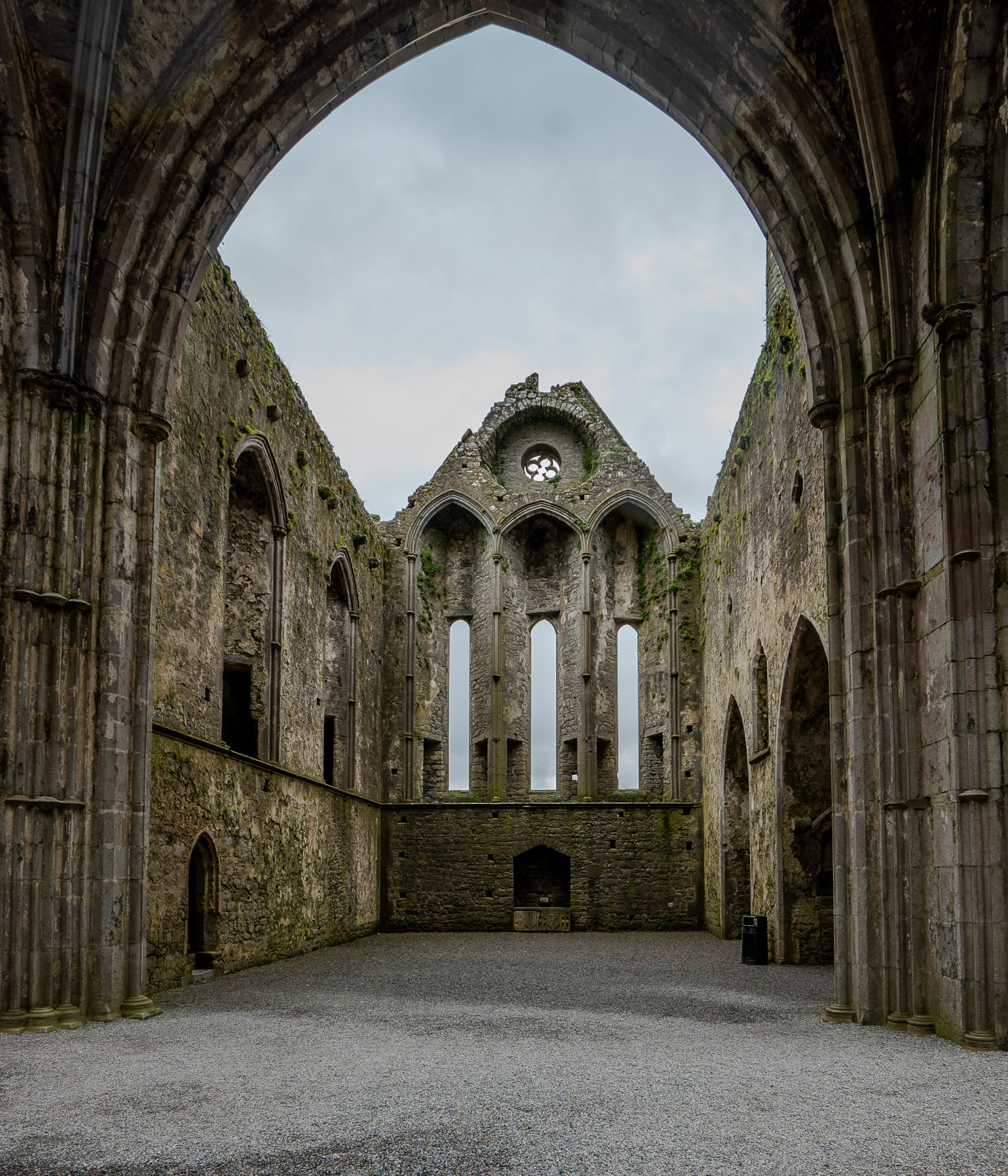
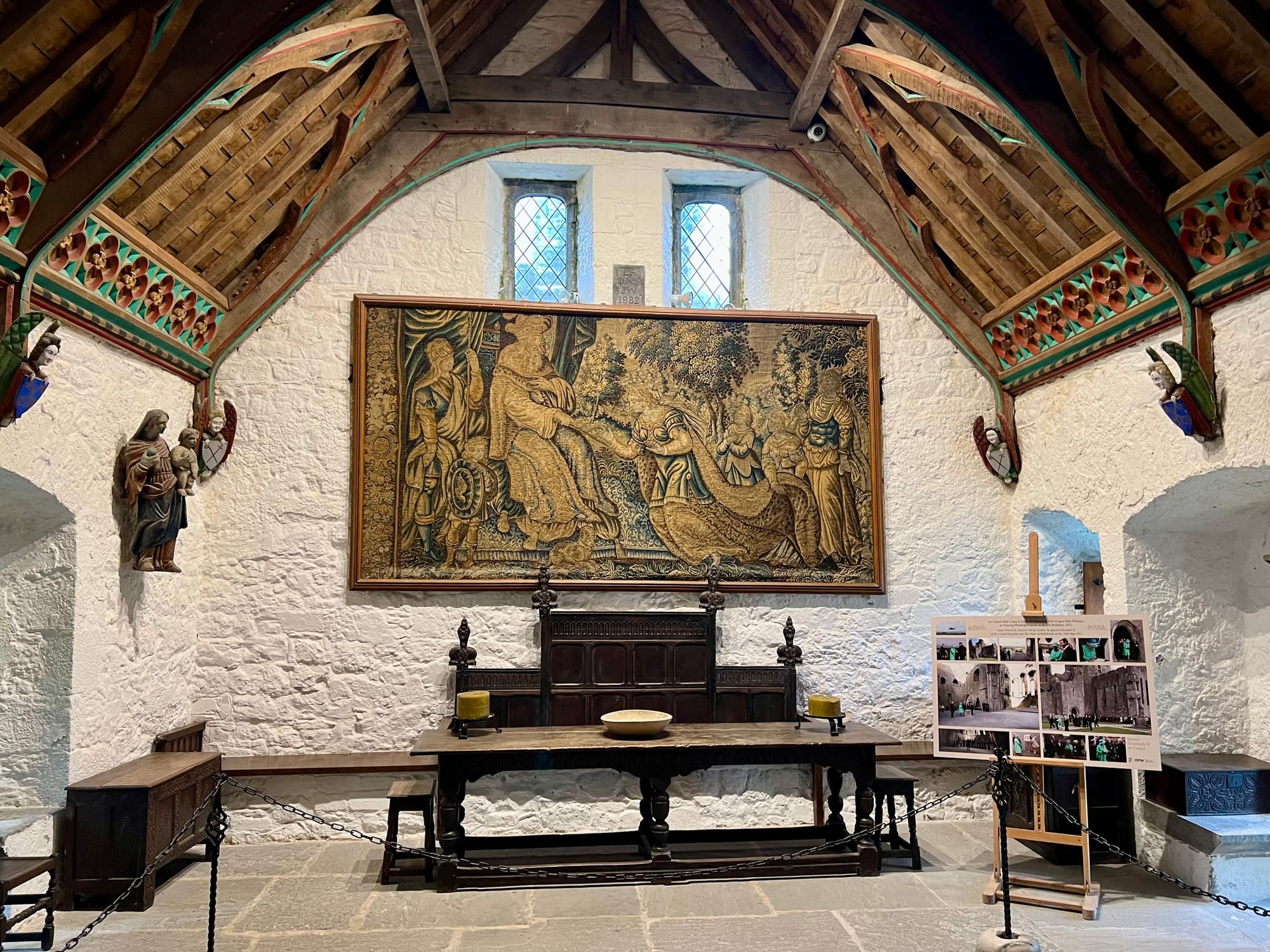
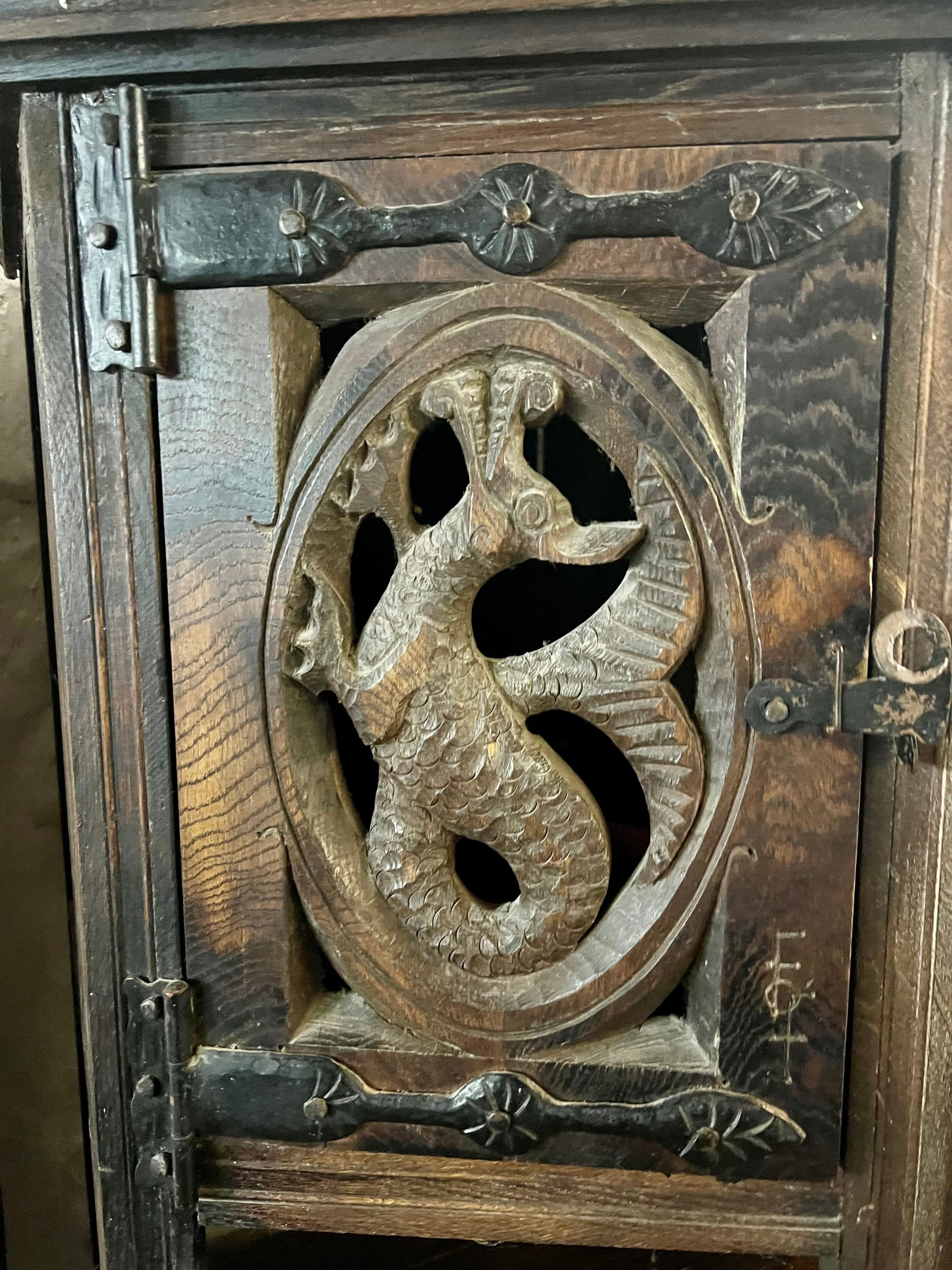
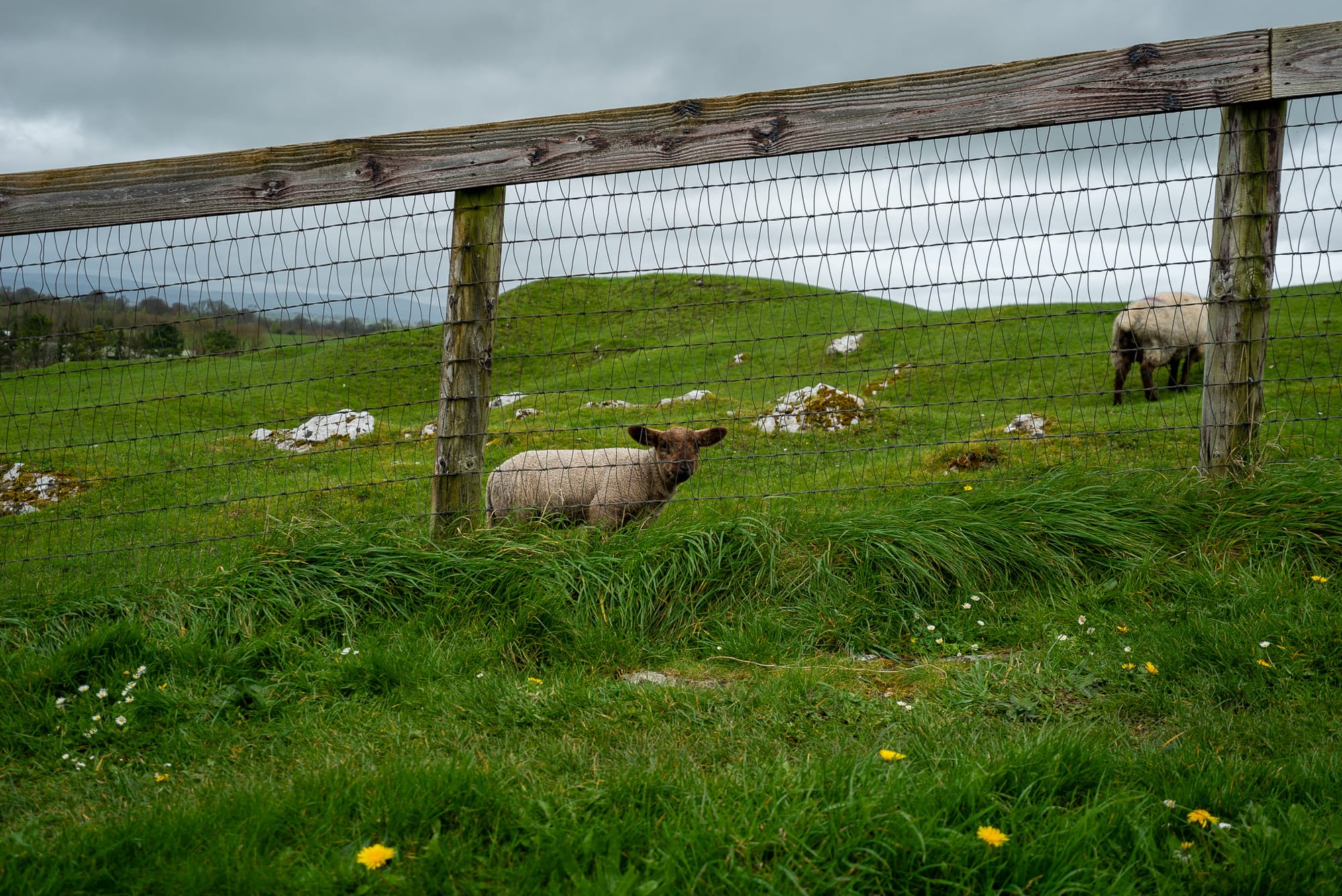
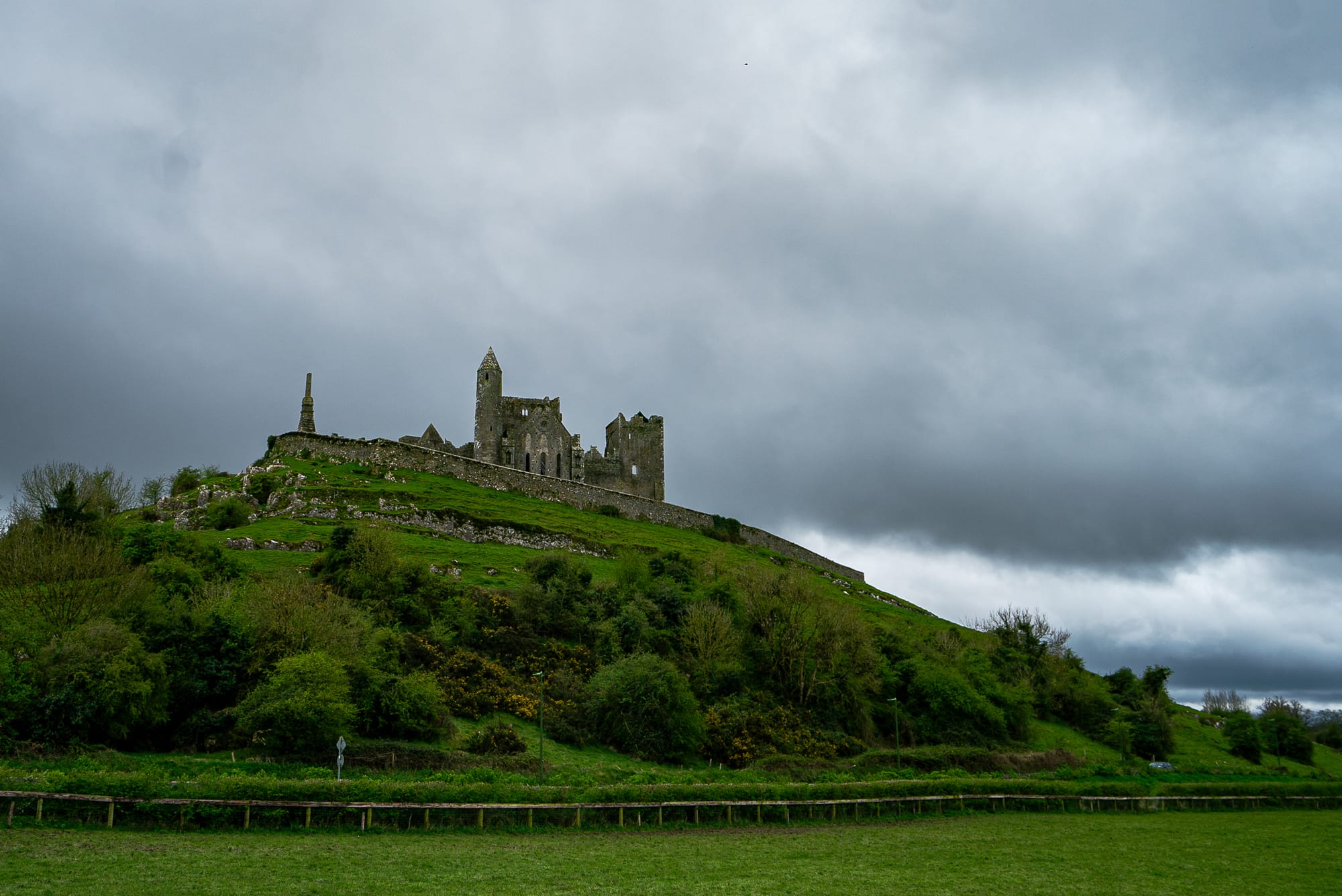
Now it is just a beautiful testament to medieval craftsmanship on a hill. Abandoned, but inhabited daily by us curious pilgrims. Derelict, but amidst restoration. Ancient, but inspiring a thriving haven for culture. Home to sheep and sculptures of strange dragon mermaids which I am about to google the heck out of.
The Rock of Cashel was hollowed of everything it had been, but Rick Steves was right. "One of Ireland's most historical and evocative sites."
Well worth the slight detour as we travelled from Kilkenny to Cork.