Ireland - Day 1-ish Travel and Kilkenny
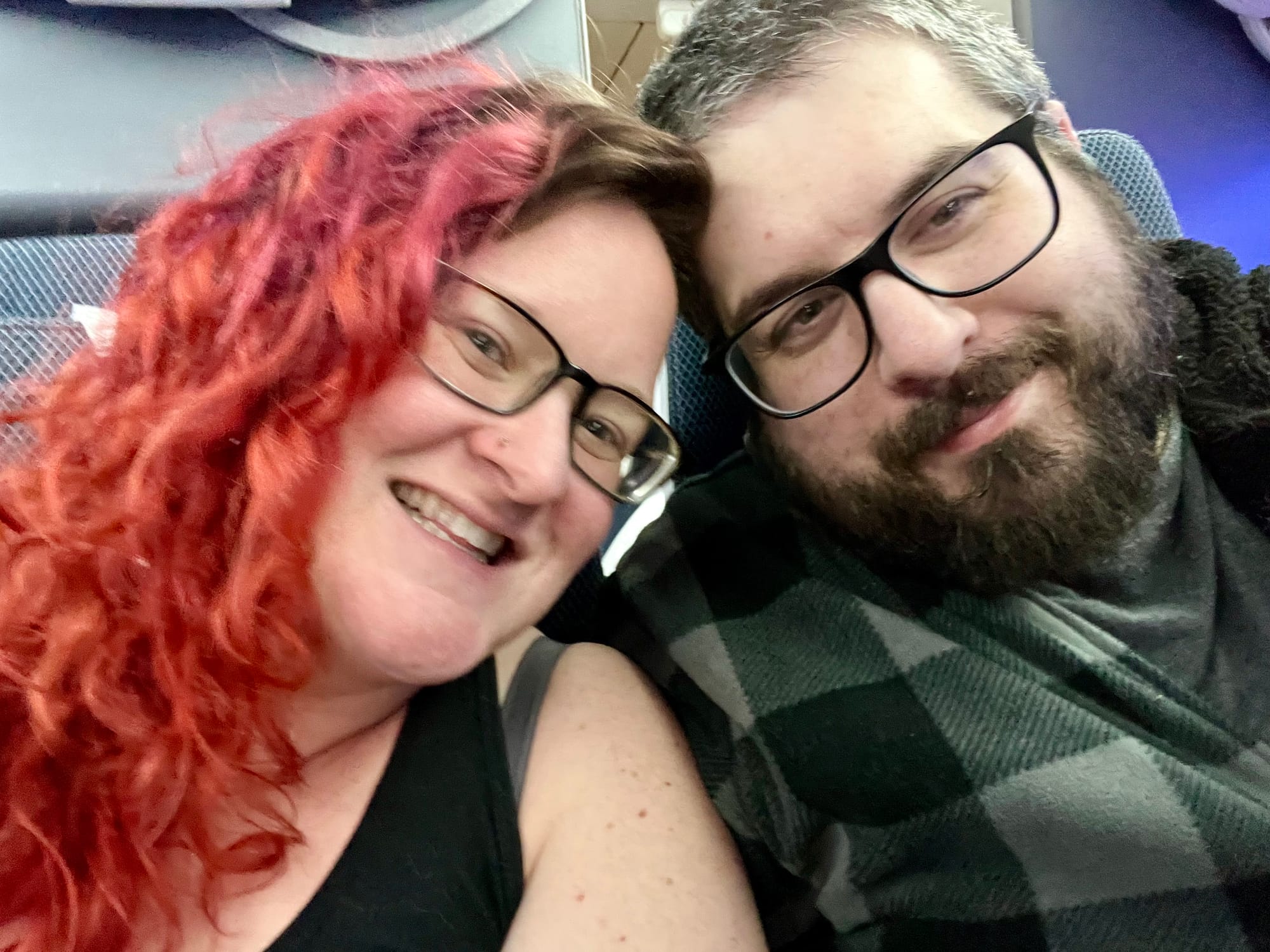
As brilliant as it sounds to take the overnight red eye from Nashville to London, theoretically tricking your brain out of jetlag, we ended up only tricking ourselves.
Our last day in Nashville was a mix of frantic last-minute preparations and stagnant thumb twiddling as we waited for the 9:30pm flight. By then we were excited and already exhausted. I was able to snare a bit of sleep while we crossed the Atlantic. But my intrepid explorer husband caught none himself. Leaving us both jetted and lagged by the time we stepped foot on Irish soil.
We planned to see as much of Ireland as we could possibly squeeze into this trip. Because of that, we were immediately on the move again. With the keys to our car rental in one hand and a fresh cup of coffee in the other, we set out for our final destination of the day. Kilkenny, Ireland. Not a long drive, really, a little over an hour and a half south of Dublin with roadsigns reminding us that Tiredness Kills in both Gaelic and English.
The roadsigns assured us Kilkenny was both "Ireland's most Medieval city" and "A gem in the heart of Ireland's ancient East." Neither accolade we could really take to heart quite yet. We checked in, tired and ready to be done. We only had the energy for an appreciative nod at Past Christina who had thoughtfully pre-booked our dinner at the Hoban Brasserie, the hotel's restaurant.
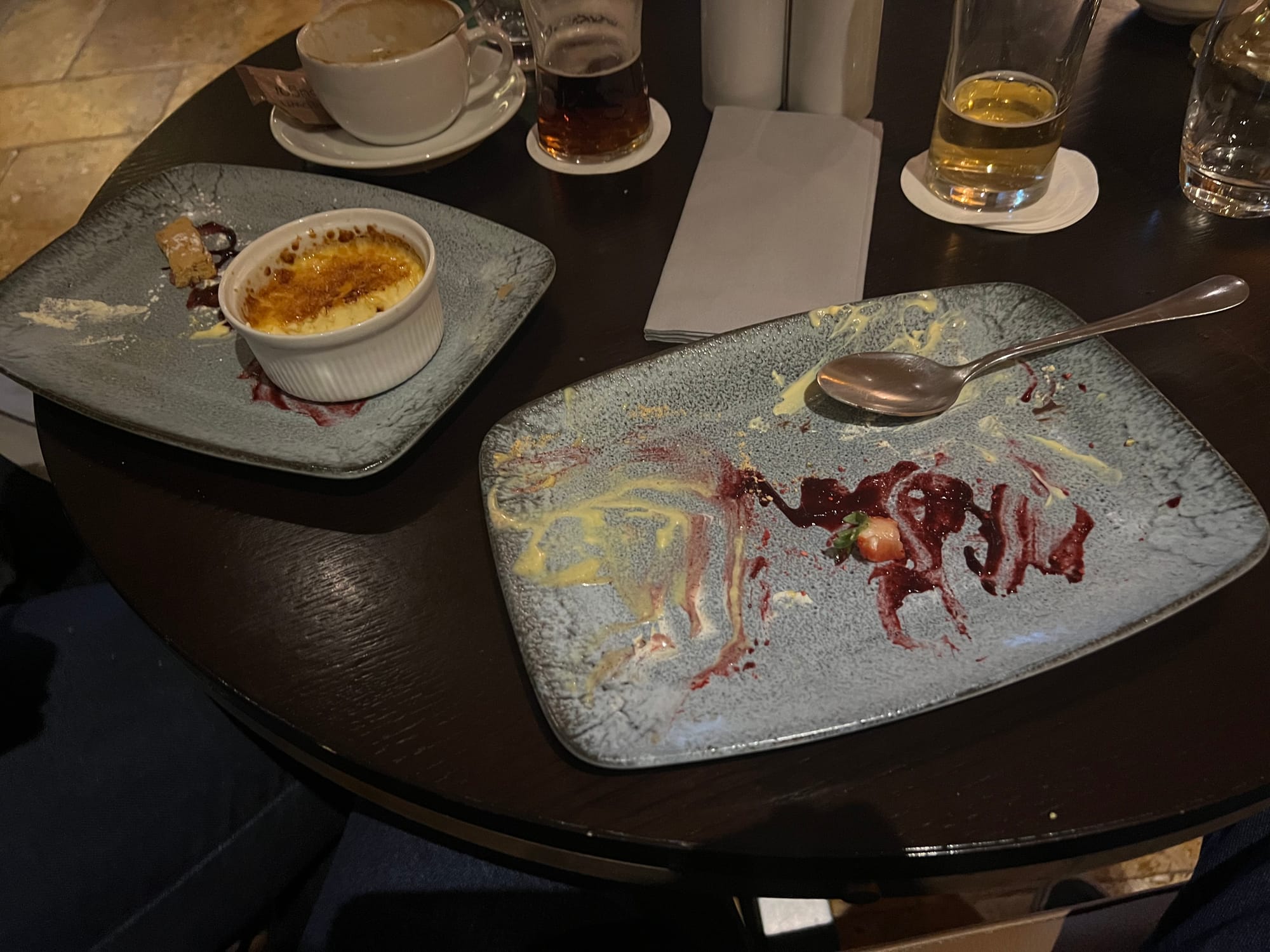
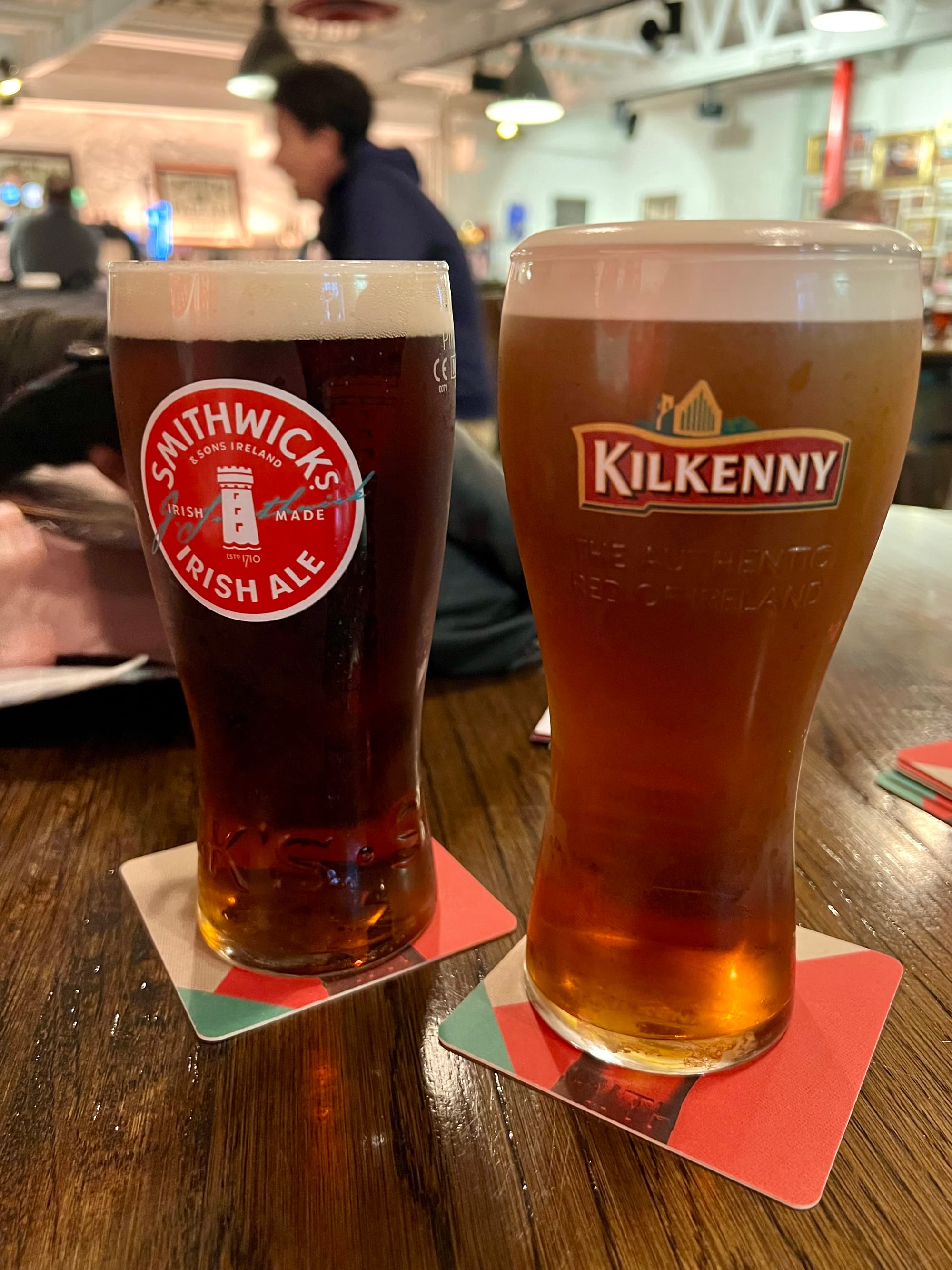
We devoured our dinners: fish and chips for Michael and a bacon steak (pork chop) for me. And then inhaled our desserts (coconut ginger creme brûlée and pistachio orange canolli). The only thing we thought to record was the drinks.

But we woke up bright and early the next morning (Michael's Birthday!), not too far off our natural sleep cadence. So, maybe the red-eye did do the trick after all. We grabbed a quick breakfast at the hotel and sat down with our guidebook, Rick Steve's Ireland, and made a plan.
Because I was the one mapping out the plan for this trip, we had a clear list of our nightly accommodations, but only the vaguest of actual plans for each day. Which is somewhat how we like to travel. Keep the plan loose, and leave room for adventure.
Kilkenny castle
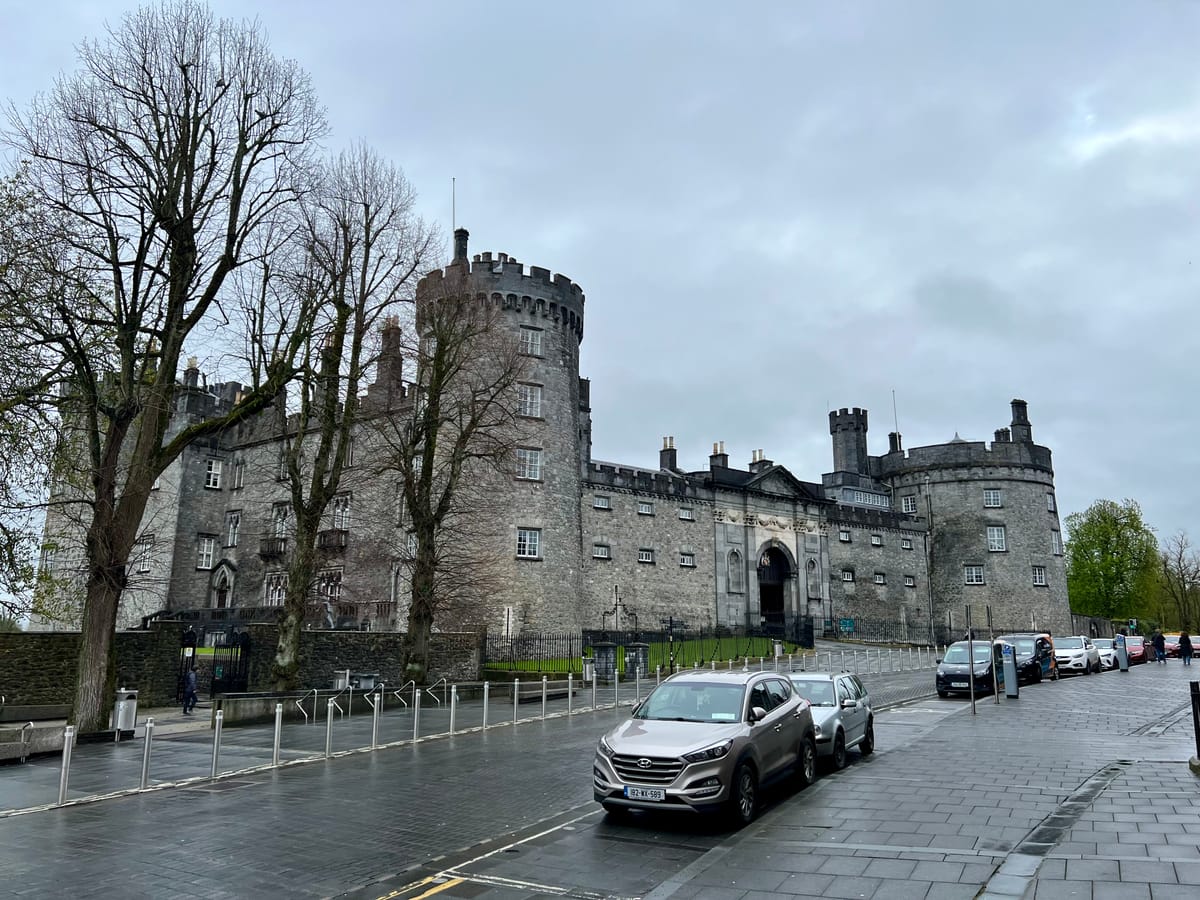
We started at Kilkenny Castle, a stronghold that has been built and rebuilt with every invading force. This location, first held by the Irish King of Osraige, was taken by the Anglo-Normans. In 1173, three years into the Norman invasion, they built the first castle here. It was rebuilt in stone by 1260. The castle was held by Anglo-Normans until mid-late 1300s when the English crown seized it and sold it. By 1390, the Castle became the property of the Earl of Ormonde, a member of the Butler family (who had discarded their Norman surname (FitzWalter), for a more anglicized option). The Bulter family owned and continued the cycle of redesigning/maintaining this ancient strong hold until the 1950's when it was sold to the city for preservation.
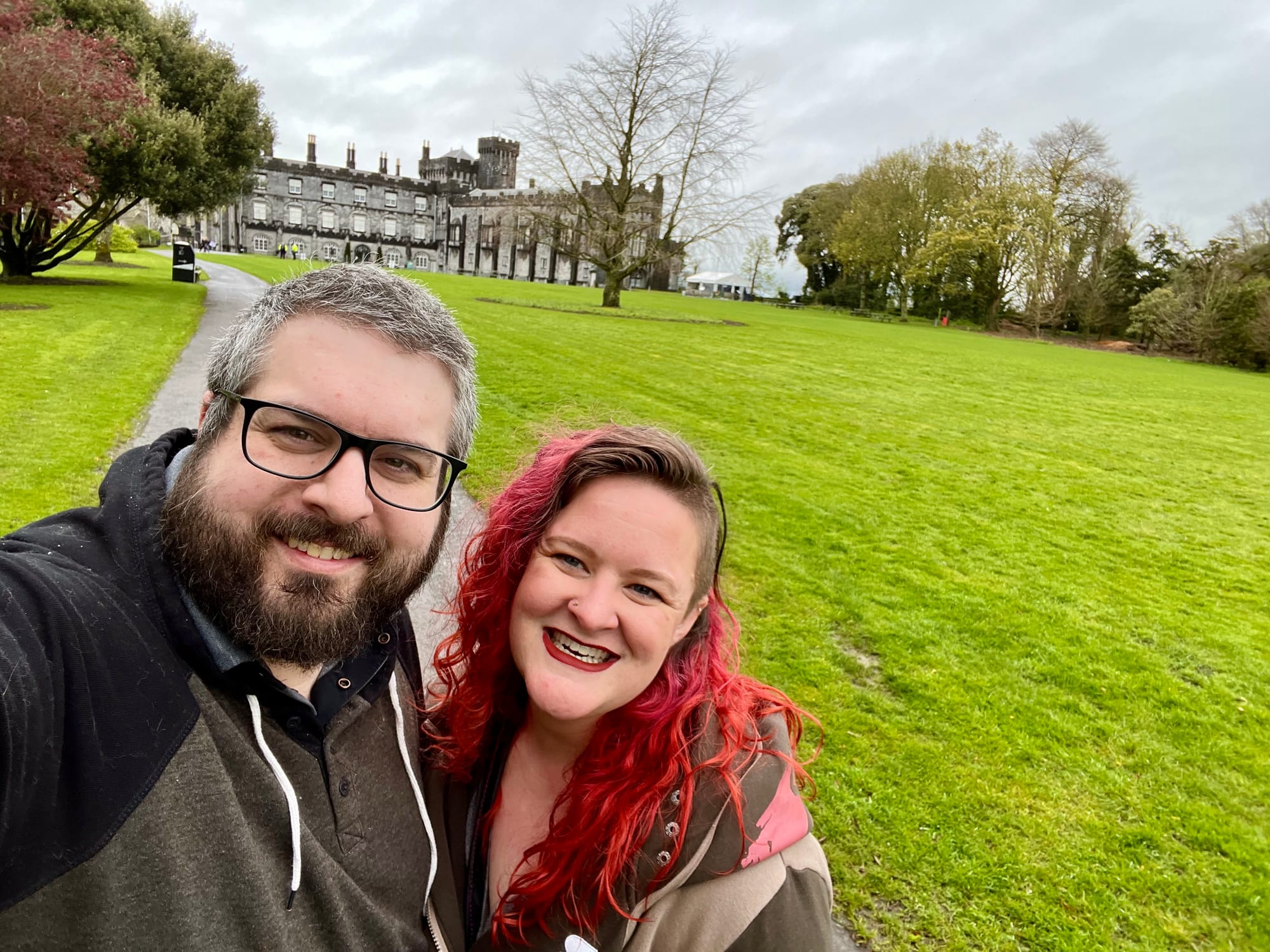
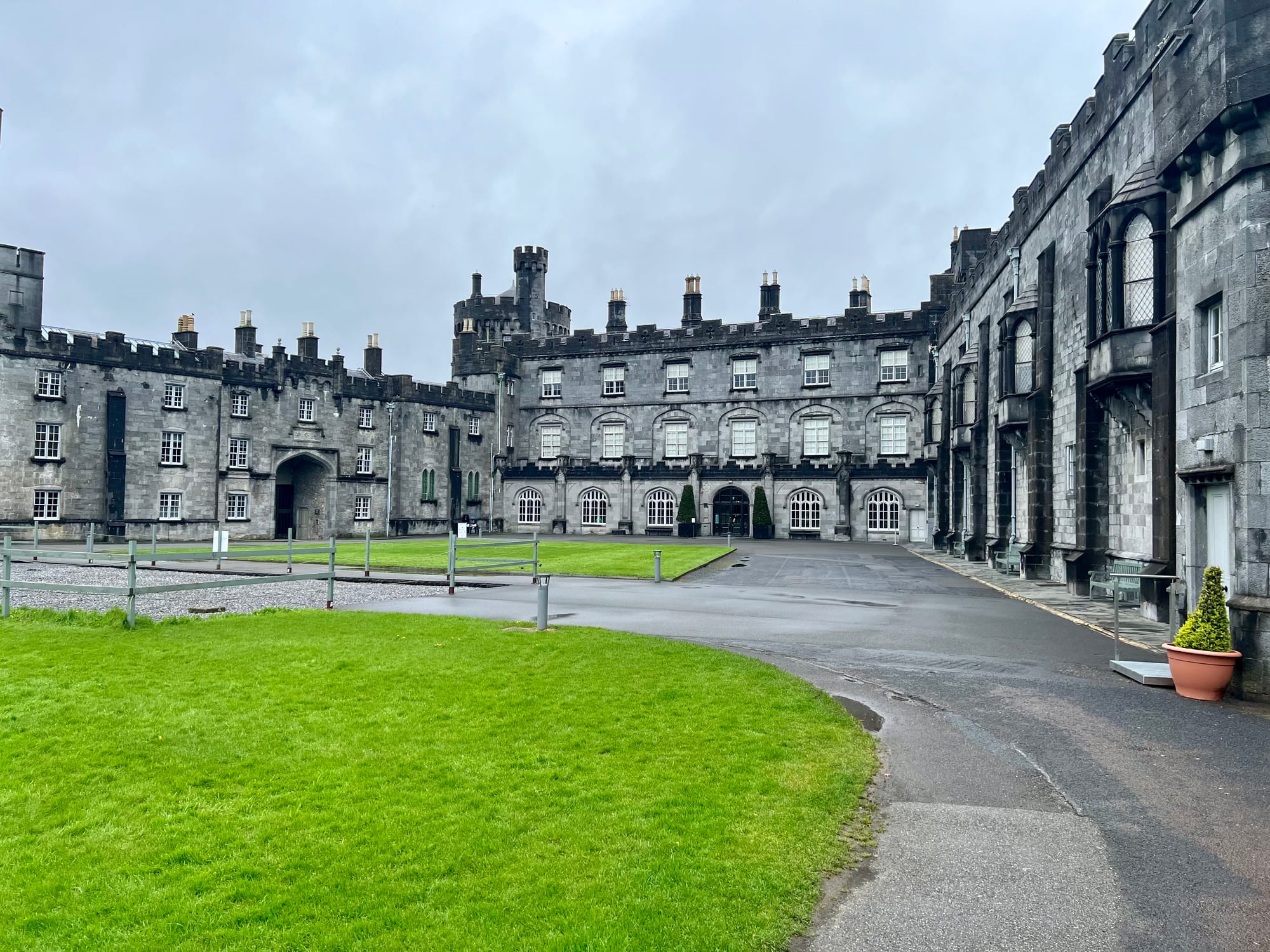
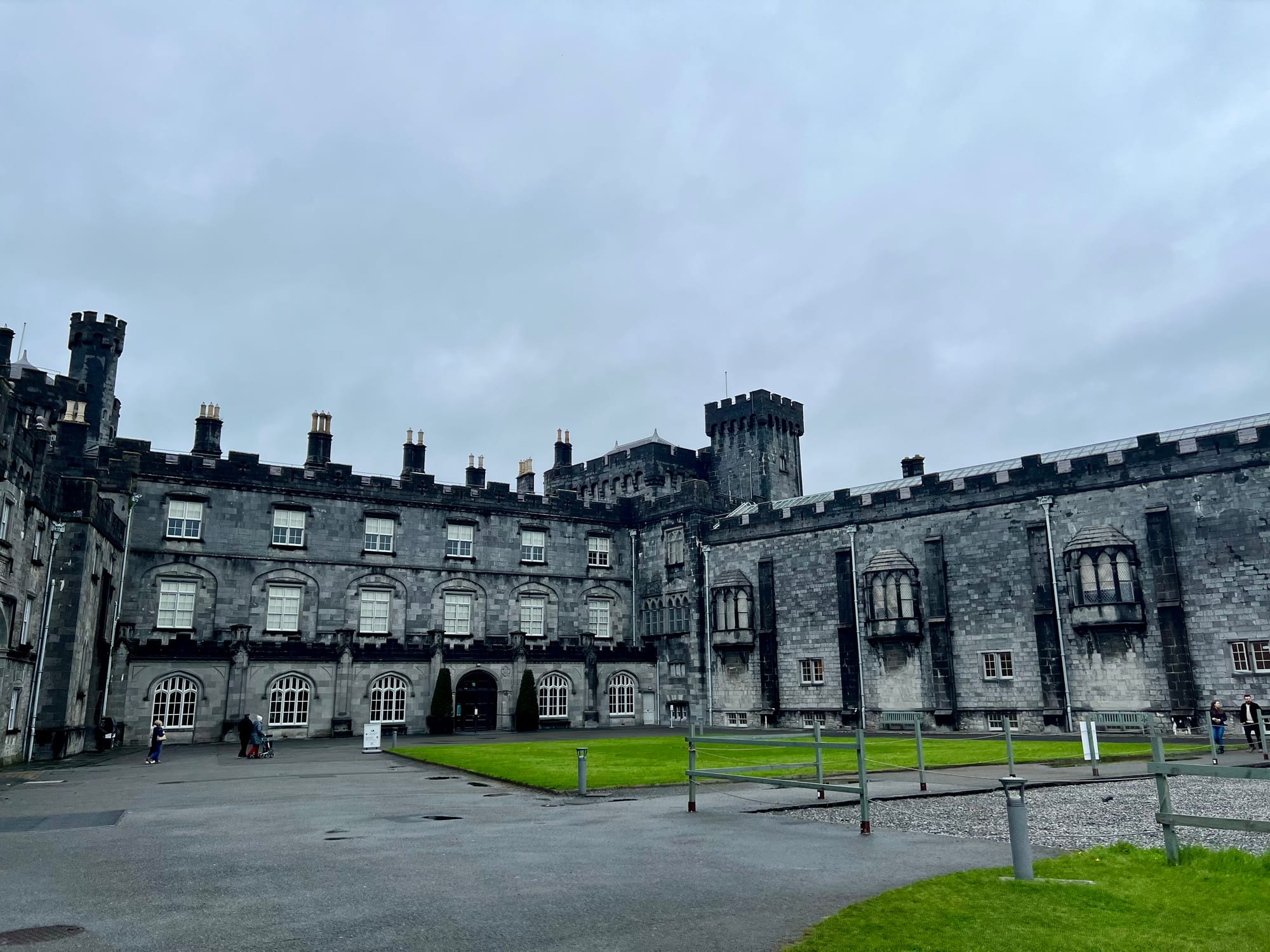
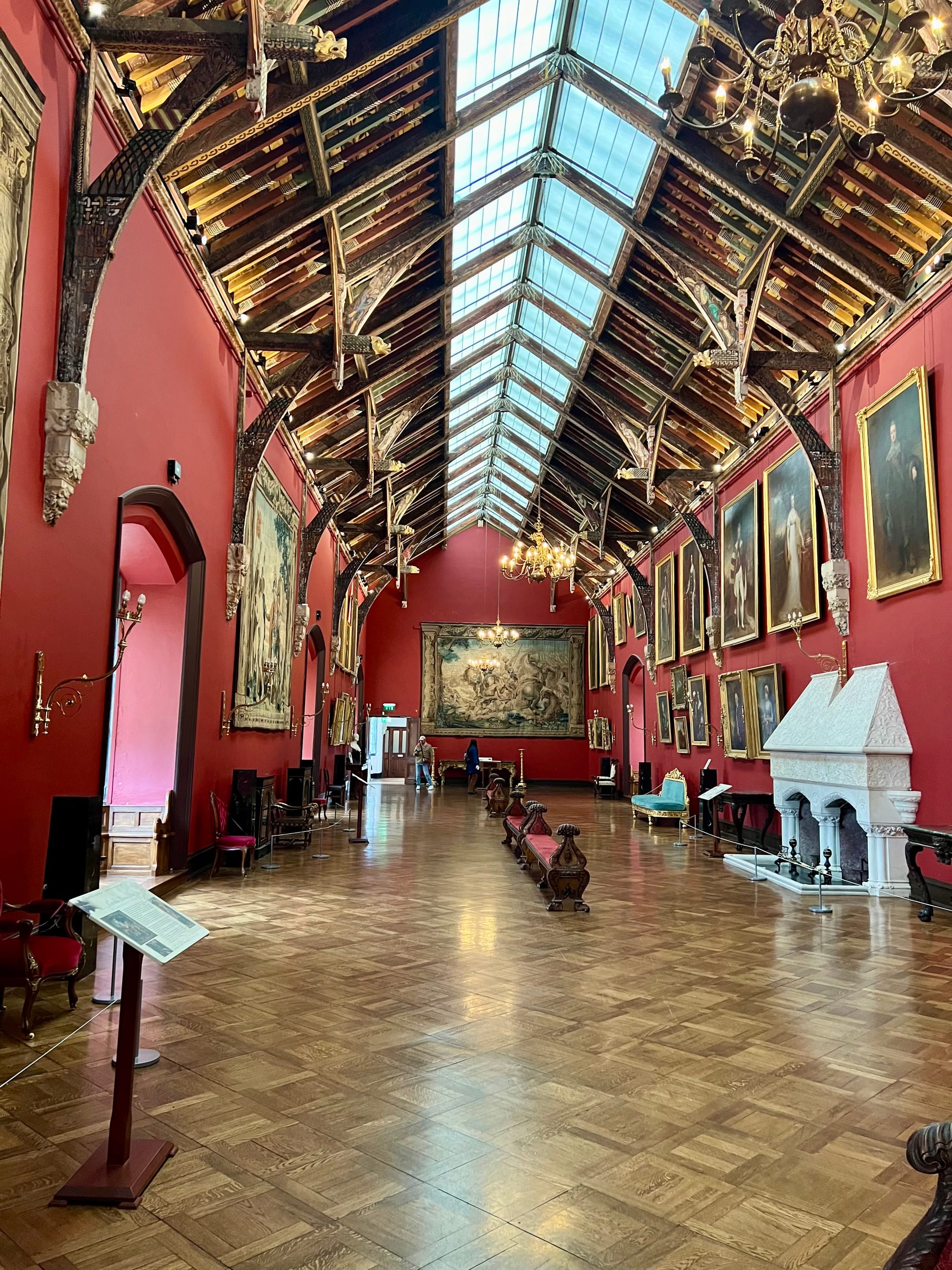
It's interesting to hear the history play out, castles seized and sold off and seized again while the Irish continued to do their best to survive and thrive regardless. Now, the castle and grounds have been converted into a revenue center for the city. Part was converted into Kilkenny Design center where local artists and designers can set up shop, the grounds were allocated for a city park. And the residence is open for tourists and history seekers.
Town
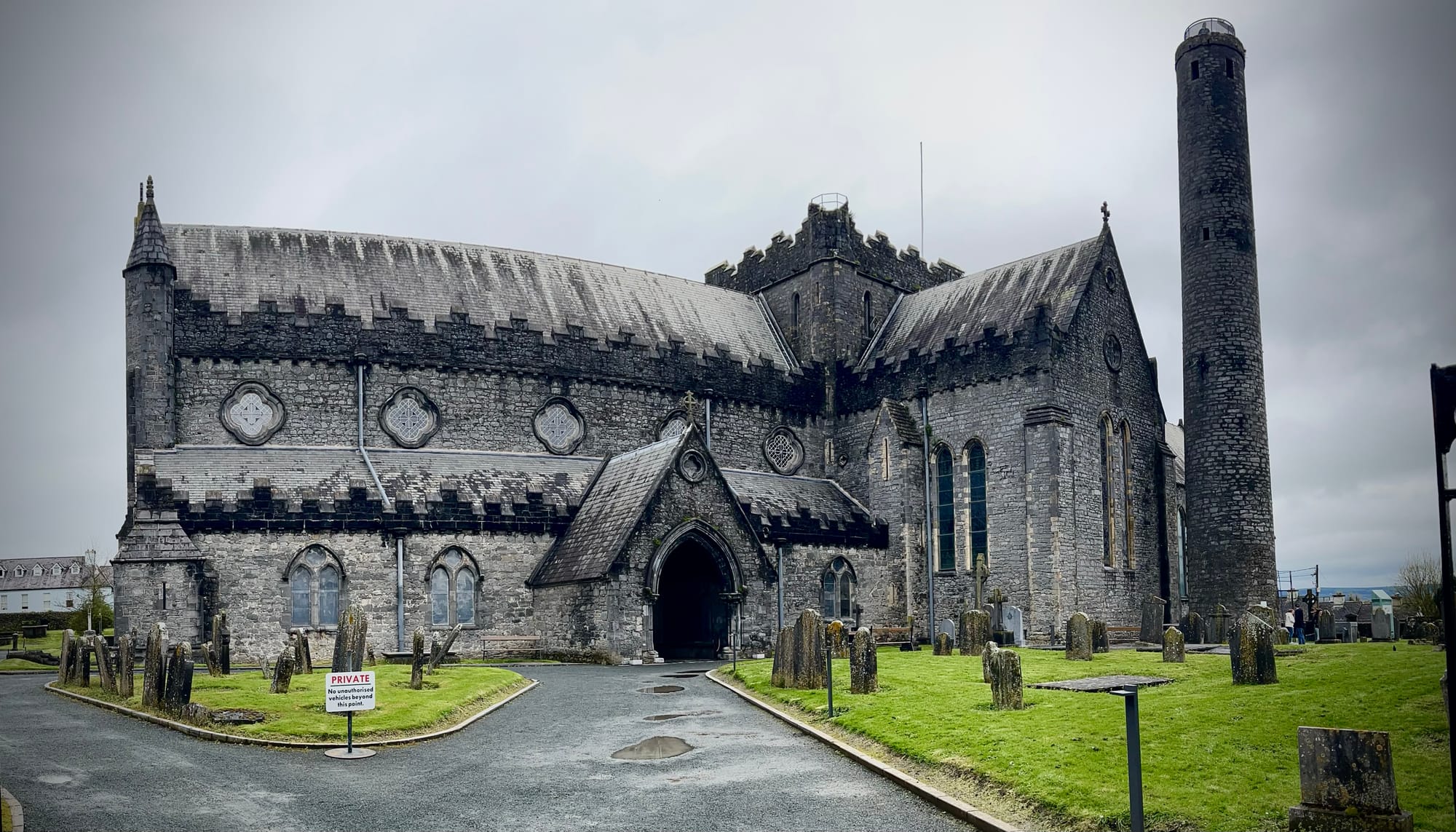
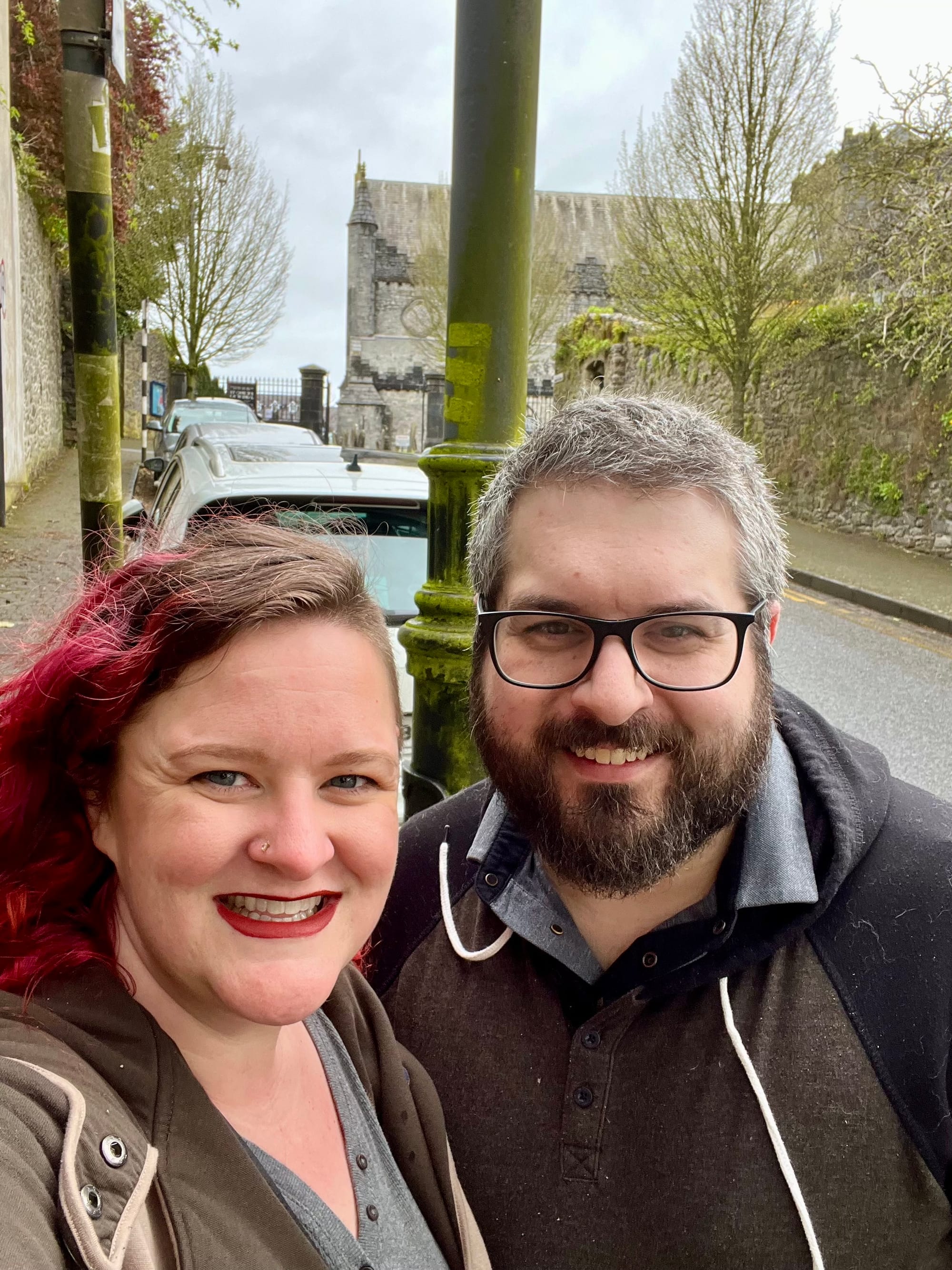
After the castle, we followed Rick Steve's advice. Trodding down high street to find Kilkenny Book Connection, St. Canice's Cathedral, taking a left and then a left past the Black Abby until we found ourselves at the door of an ancient franciscan abbey that is now famous for the ale they brewed.
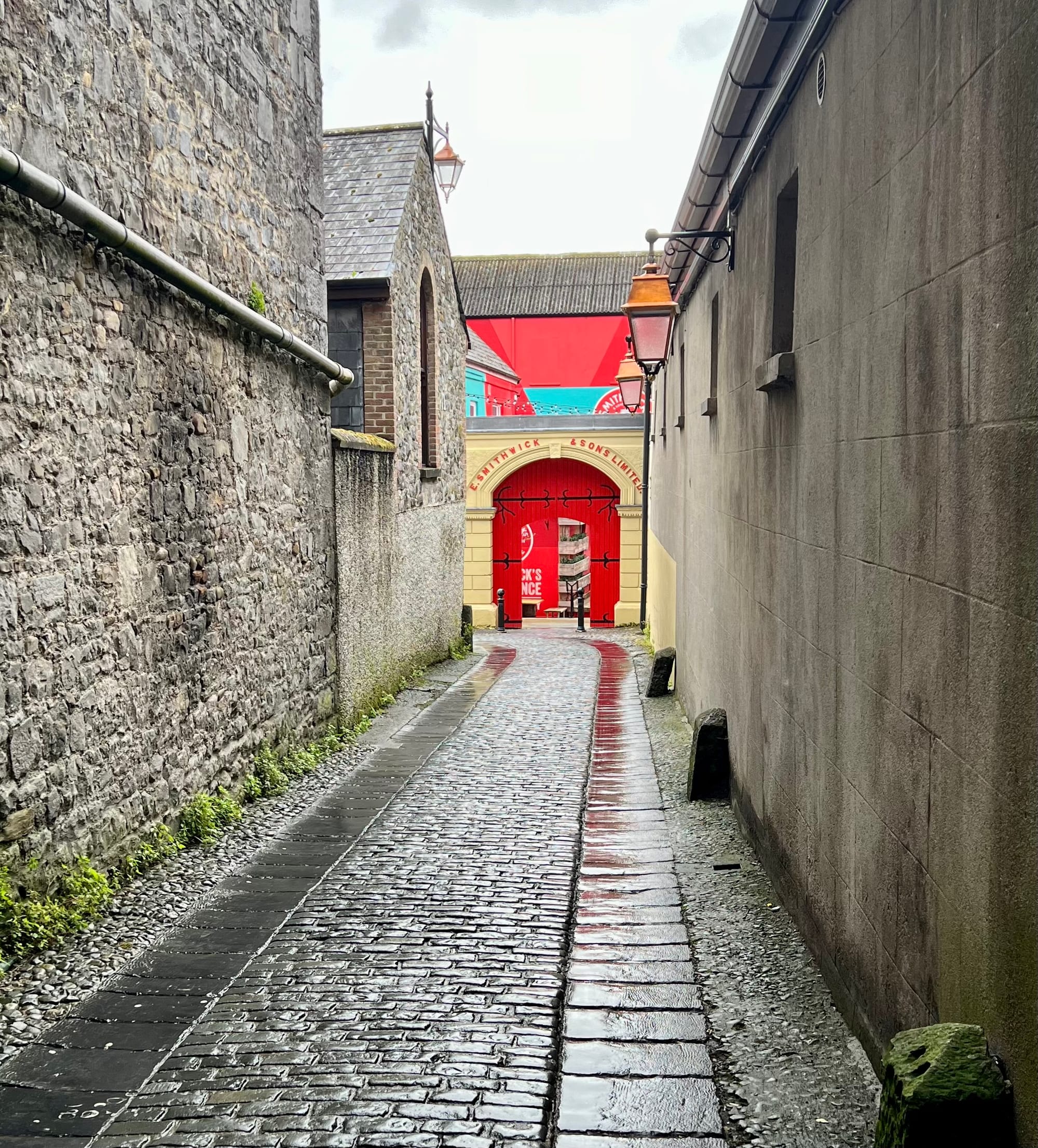
Smithwick
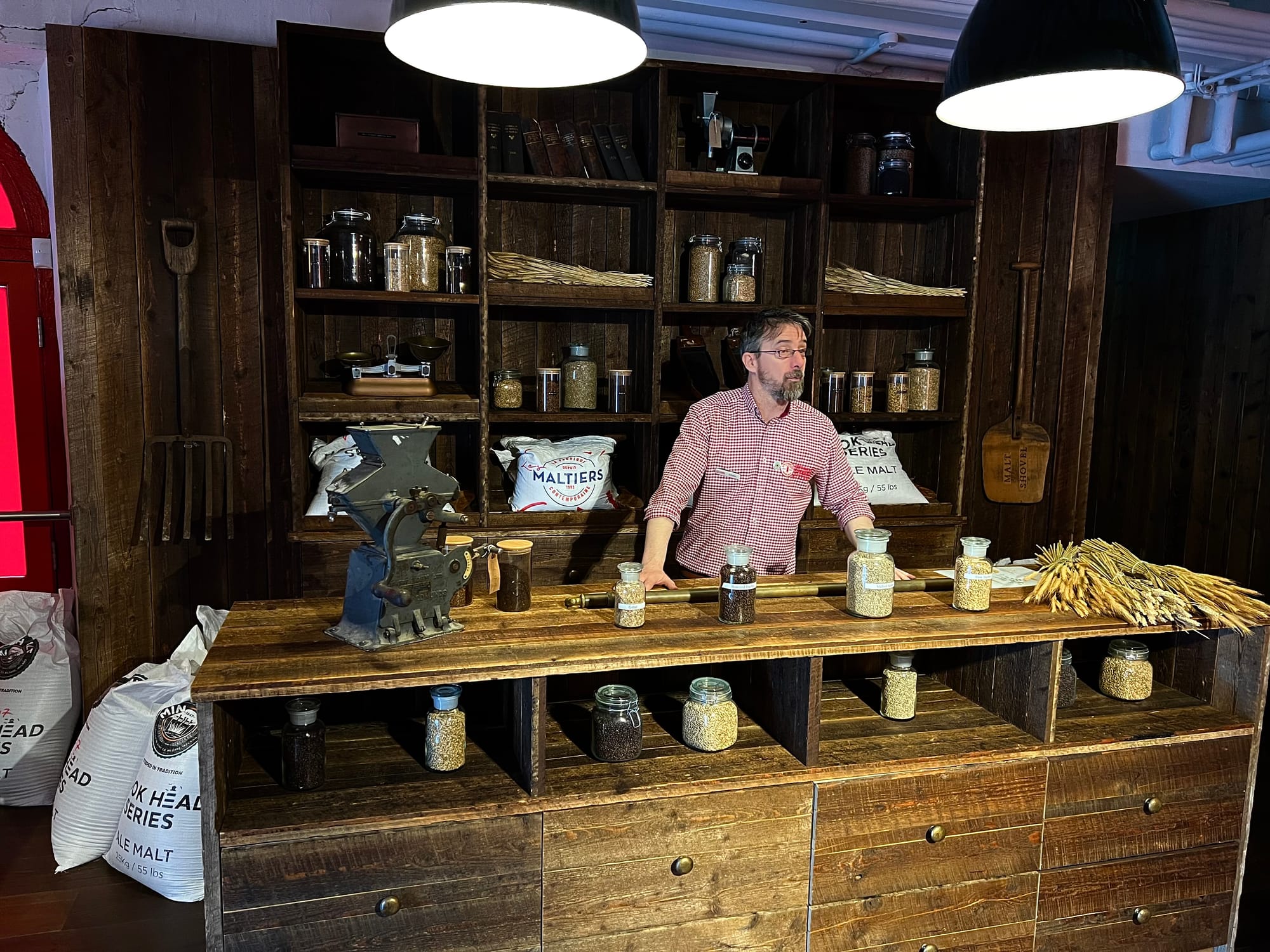
It's funny to hear that Smithwick's Red Ale's origins began in a religious house. But I guess I can't be too surprised that medieval monks needing to purify their drinking water decided to turn it into beer. Or that the locals, who also needed decontaminated drinks, chose to purchase the beer from the monks.
So, the abbey was set up along the river in the 1300's. The beer was being made. And that's how, Irish's Oldest Ale got it's origins. At some point, the abbey stopped producing their home brew, but Kilkenny did not. So in 1710, when John Smithwick, the father of the brand we know and love today, decided to start a company producing Ale for the masses, he set up shop in that same spot.
Of course, John Smithwick isn't named on any contracts. He was Catholic, and they weren't allowed to own businesses at the time. But his family ran and grew their brand until it can be found worldwide. Now his family name written in big happy letters, a protected historic site, that welcome you in to the former abbey and brewery.
Smithwick's Kilkenny Irish Cream
St. Mary Medieval Mile Museum
I can't really describe how humbling it is to do a walk through tour of a brewery that was founded 60 years before my country decided to become a country.
Or how grounding it is to once again realize how short a history the USA really does have.
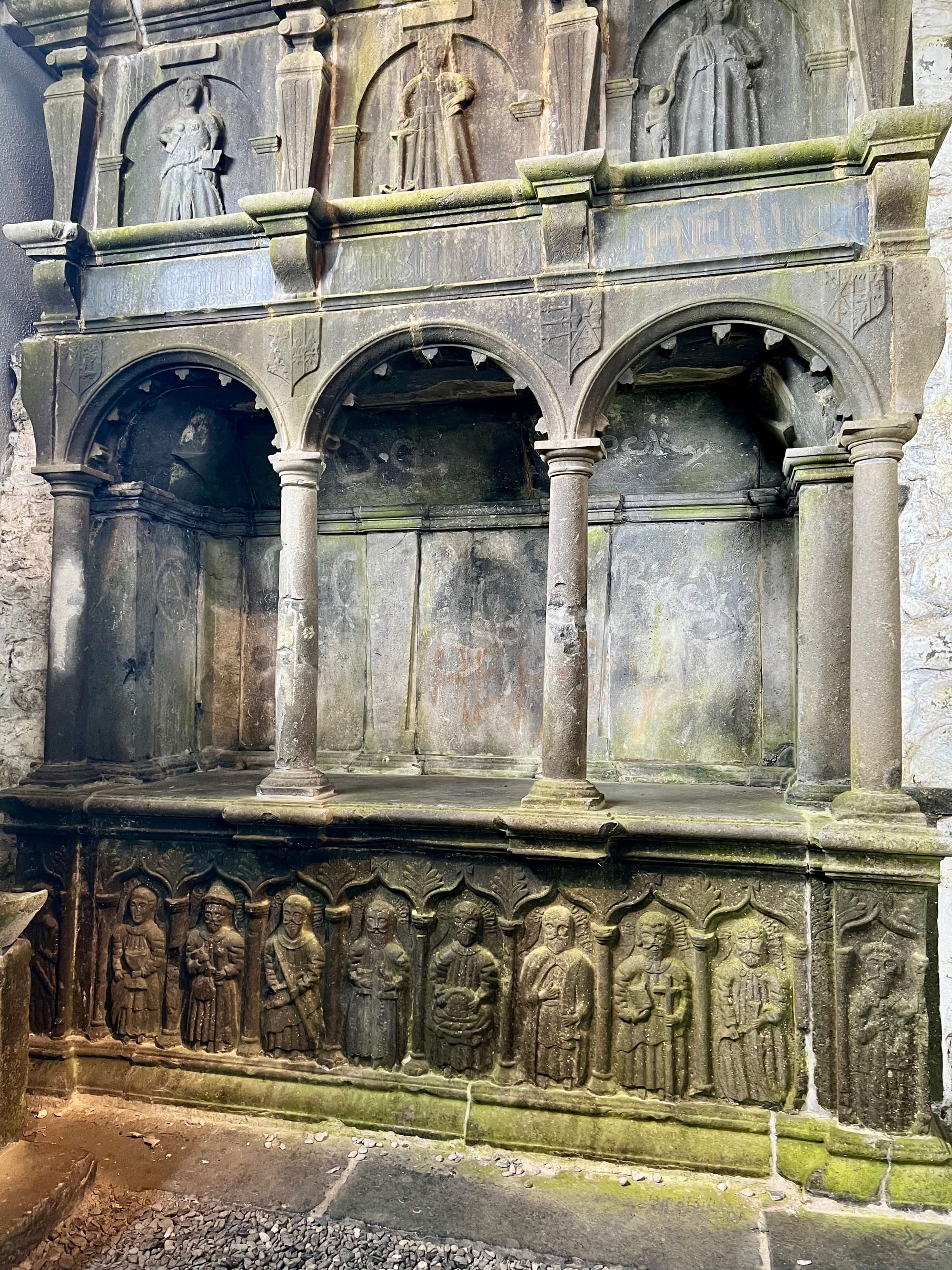
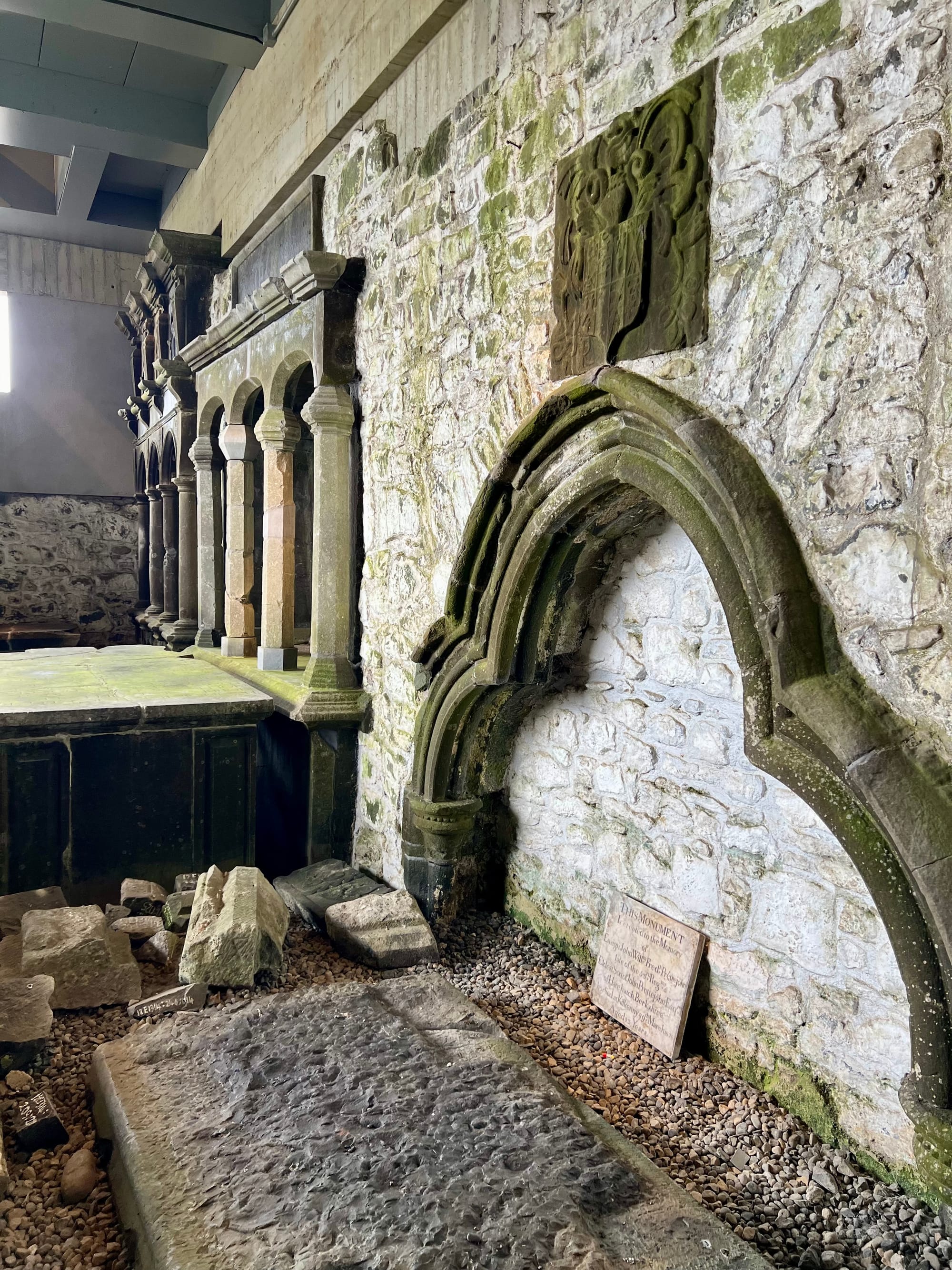
St. Mary's Medieval Mile Museum is a small, but impactful little display of medieval history of this town. They've been excavating and preserving artifacts found on this church, which is primarily a history of the people who were buried there. Tombstones and gravesites that date back to the 1300's. Ancient frescos that are being painstakingly restored. Crosses and other religious iconography that encapsulate years of someone's hard work in their beauty and design. As well as hilarious missives sent by the town officials to make sure it was unlawful for Idle Women to make and sell Unwholesome Half-Baked Bread. It was a small but fascinating showcase of history.
Because we already had walked and toured many of the Medieval sites separately, we didn't take their proffered guided tour that walked you down the ancient mile to show you the history of the town. We didn't really need it.
The history was evident in every weather worn stone. You could feel it on the walls smoothed to a polish from 800 years of hands dragging across them. You could see it in the details that had survived. This is a town that has been made and worn down and made again in its long austere history.